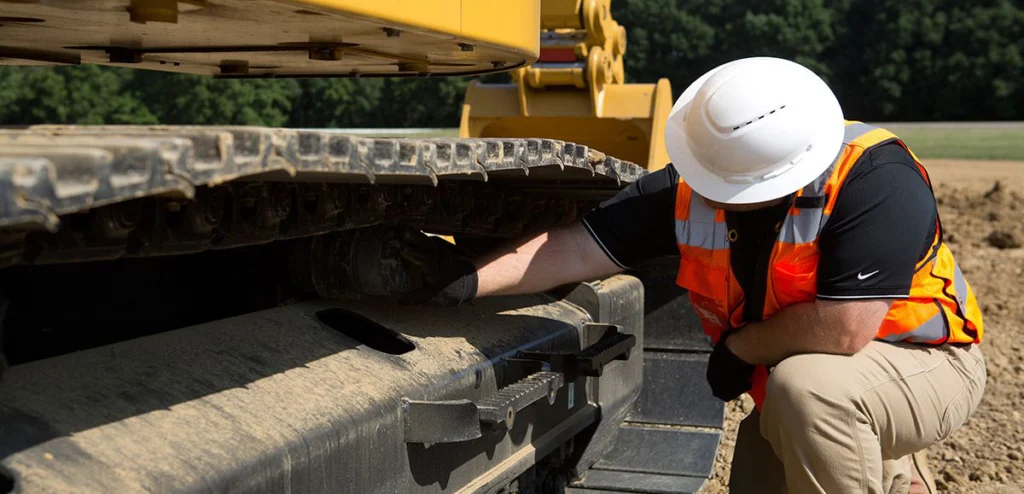
Many undercarriage failures do not start with bad parts. They start with small maintenance habits ignored over time. Seasonal track greasing is one of the most effective and lowest-cost actions that operators can take to protect sprockets and idlers. Simple timing. Correct grease choice. Proper application. These details directly affect wear rate, machine stability, and long-term repair costs.
Seasonal conditions change how tracks behave. Cold weather thickens grease. Dry environments increase dust intrusion. Wet seasons push water and mud into seals. Without adjustment, standard greasing routines fall behind real working conditions. Metal-to-metal contact increases. Heat builds up. Sprocket teeth wear unevenly. Idlers develop flat spots and seal damage.
Greasing before winter is critical. Low temperatures reduce grease flow. Bearings receive less lubrication at startup. Extra resistance forms during cold starts. Applying winter-grade grease before temperature drops ensures smooth rotation. Better oil separation. Faster circulation. Reduced startup stress on idlers and sprockets. Operators notice quieter movement and steadier tracking.
Spring and summer bring different risks. Fine dust and sand act like grinding paste. Over-greasing pushes contaminated grease deeper into seals. Under-greasing leaves surfaces exposed. The correct balance matters. Seasonal inspection combined with controlled grease volume protects internal components. Cleaner lubrication keeps rolling surfaces smooth and aligned.
High humidity and rainy seasons demand attention to sealing. Water contamination accelerates corrosion. Grease with strong water resistance forms a protective barrier. Proper purge technique pushes out moisture instead of trapping it. This practice prevents rust pitting on idler shafts and sprocket hubs. Longer component life follows.
From the user perspective, the benefits are measurable. Lower operating noise. Reduced vibration. More even track tension. Less frequent adjustment. Extended service intervals. Fewer emergency repairs. These results directly improve uptime and jobsite efficiency.
Professional-grade undercarriage components respond best to proper lubrication. Precision-machined sprockets and idlers rely on clean grease channels and tight tolerances. When paired with seasonal greasing discipline, their full design life becomes achievable. Poor lubrication wastes high-quality parts. Good lubrication unlocks their value.
Experienced suppliers design components with real-world maintenance in mind. Optimized grease paths. Durable seals. Materials tested under extreme temperature cycles. These features support seasonal lubrication strategies instead of fighting them. This level of engineering comes from long-term production experience and strict quality control.
Conclusion: Seasonal track greasing is not optional maintenance. It is a strategic tool to reduce sprocket and idler wear. Adjust grease type, volume, and timing with the seasons. Protect your undercarriage investment. Improve machine reliability. If you want guidance on matching greasing routines with your operating conditions or need durable undercarriage parts built for long service life, reach out today for technical support and a fast quotation.
Fulian Operation Team
2026.1.12